Before the Village Hall: Where Neighbours Met
Before the village hall, neighbours gathered in inns, churches and on village greens. See how each setting shaped who could meet, speak and belong.
The common mistake in remembering village life is to treat every old meeting place as a village hall without walls. Before the village hall, neighbours met in rooms and open spaces that belonged to someone, served another purpose, or depended on the weather. That distinction mattered: it affected who felt welcome, what could be discussed, and whether a gathering could become a regular part of local life.
There was no single route from inn to church to green to purpose-built hall. Places overlapped, and local custom, land ownership, religious practice and available money shaped what people used. To understand a community’s memory, sort the places by what a gathering needed: a warm room, a shared ritual, open ground, or a dependable space under local control.
When did a gathering need a warm room?
An inn or alehouse suited meetings that needed shelter, seating and something to eat or drink. It was already a place where people came for company and news, so a group could gather without building a special venue. A back room might host a club, a discussion, a hiring conversation or a local committee, depending on the innkeeper and the people involved.
This arrangement was convenient, but it was not neutral. The room belonged to a business, and the proprietor controlled access and arrangements. Buying refreshments might be expected, customary or simply part of the setting; for anyone with little money, or who did not drink, that could make participation feel less straightforward. The inn’s ordinary traffic also meant a meeting could share space with customers and conversation.
Think of an inn room as a borrowed kitchen table: useful because it is already there, but not yours to rearrange without asking. It can bring a group into close contact, yet the host’s needs and the room’s other uses remain present.
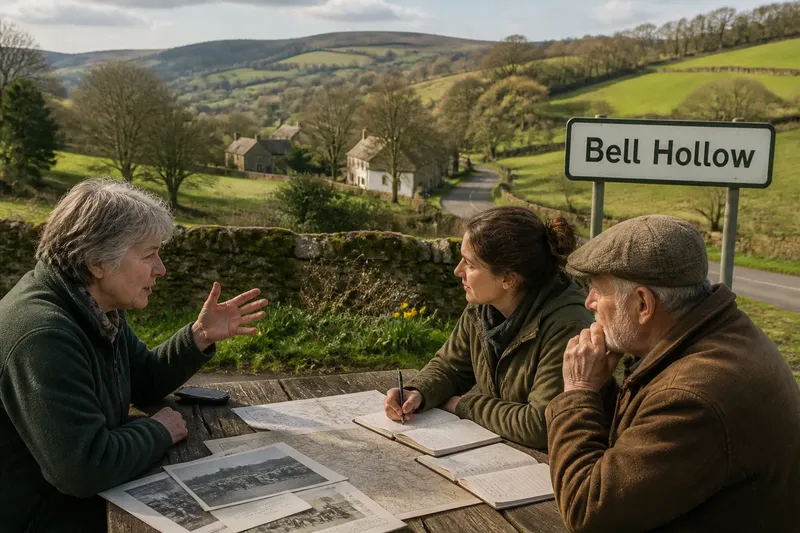
If you are trying to understand a remembered gathering in an inn, ask who arranged it, who was expected to attend and whether the group had a room to itself. A recollection of “meeting at the inn” can describe an intimate discussion, a busy social evening or a practical transaction. The venue alone does not tell you which.
When did a gathering need a shared ritual?
Churches and their associated spaces connected people through worship, seasonal observances and parish responsibilities. A churchyard, porch, vestry or other parish room might serve as a point of contact before or after a service, or as a place for business linked to the parish. The setting already carried an understood meaning, which could make attendance feel natural for those involved.
That same meaning could limit the gathering. Church use was shaped by religious practice and local authority, and not every meeting belonged there. People who did not share the congregation’s faith, status or expectations might feel outside the circle, even when the building stood near the center of village life.
When sorting a story about a church meeting, distinguish the building from the activity. A service, a parish discussion and an informal exchange on the path outside were different kinds of encounter. Their memories may later merge, but each had its own rules about who spoke, who listened and what counted as appropriate.
A church setting may fit a community story when the gathering was bound to worship, parish duties or a recurring religious custom. It is a less complete explanation when the memory concerns a broad social event that included people beyond those connected to the church. In that case, look for the other places participants used before or after.
When did a gathering need open ground?
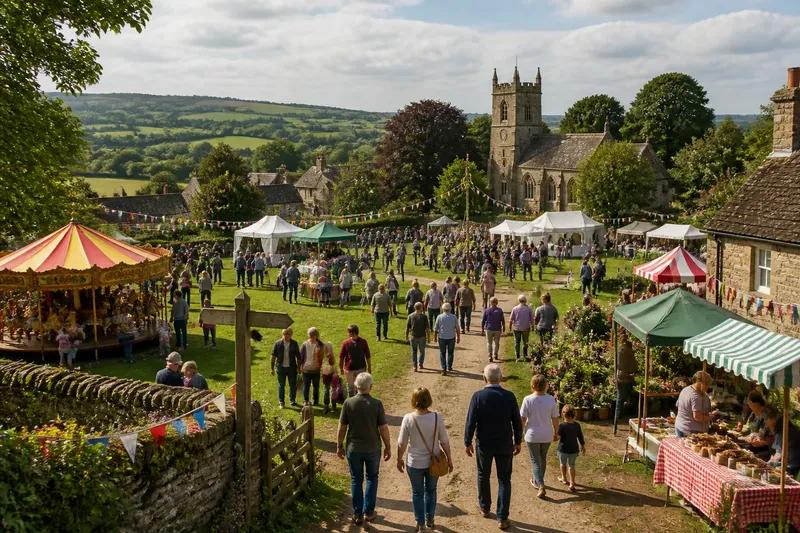
A village green, common or other open space suited occasions that needed room to move, watch or arrive in passing. People did not have to enter a building or take a seat before they belonged to the scene. That openness could make a gathering visible to the wider community and allow people to join briefly rather than commit to a full meeting.
Open ground also had limits. Rain, cold, mud and darkness could change a gathering or send people elsewhere. The space might be shared with grazing, work, traffic or other everyday uses, and access could depend on local rights and practice. An outdoor meeting therefore offered flexibility, but not the dependable shelter of a room set aside for the group.
Choose the green as the likely setting in a memory when the event depended on movement, public presence or a large, changing crowd. Choose an indoor place when the account emphasizes sustained discussion, a formal agenda or a gathering that continued regardless of the weather. These are clues, not fixed rules; communities often combined outdoor and indoor parts of the same occasion.
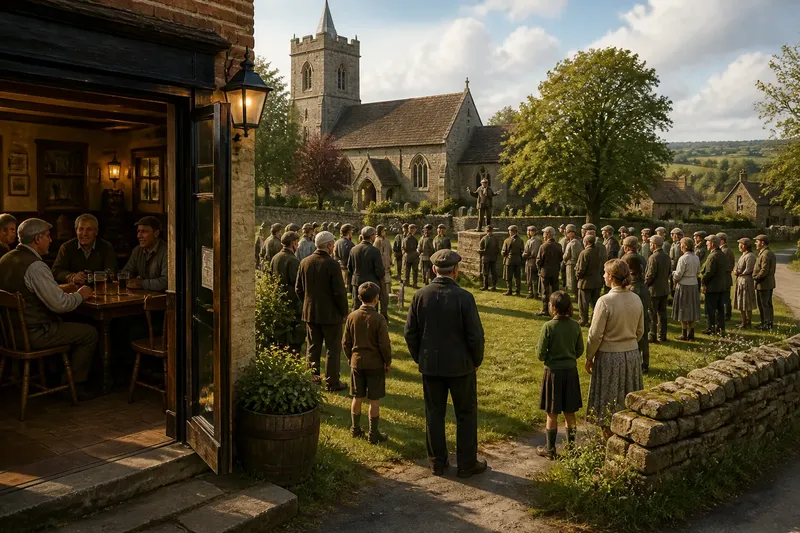
Say you are sorting a family story that describes neighbours gathering outdoors to hear an announcement, then going into an inn to talk it over. The most useful account would preserve both settings: the open space made the news public, while the room allowed a smaller conversation to continue. Calling the whole event “a meeting on the green” would leave out how the discussion changed once people moved inside.
When did a community need a purpose-built hall?
A village hall offered something the borrowed inn room, church space and open ground could not always provide: a venue intended for varied community use. A local group could arrange a regular meeting, store equipment, set out chairs and plan an activity without fitting entirely around a business or religious service. The building made some gatherings easier to repeat and gave them a recognizable home.
Purpose-built did not mean automatically shared by everyone. A hall still needed caretakers, funds, booking arrangements and rules. Decisions about which group could use it, when, and on what terms could shape village life as much as the building itself. Its presence might widen access, but the people who managed the keys and calendar still influenced who gathered.
For memory, the hall can become a marker of local organization: neighbours did not merely find a place to meet; they maintained a place for meeting. That change may be remembered through practical details such as who swept the floor, set up benches, kept the records or opened the doors. Those tasks show how a venue could turn gathering into shared responsibility.
Use the hall as the center of the story when the key change was regular access and community management. If the account is mainly about a religious observance, a commercial meeting or a public outdoor custom, the hall may be only one location among several. The building matters, but the reason people came together matters more.
How do you decide which place fits a memory?
What if the gathering was informal?
An inn, doorstep, church path or green may fit better than a hall if people met while already doing something else. Look for details such as refreshments, passing traffic, a service ending or people joining for only part of the conversation. These clues suggest a meeting woven into ordinary routines rather than organized around a dedicated venue.
What if people needed to discuss local business?
Consider who had authority over the room and whether the subject belonged to a parish, a club, a business or the community as a whole. A church-associated room may fit parish matters, while an inn room may fit a group accustomed to gathering there. A hall becomes more likely when the community had a regular arrangement for meetings across different purposes.
What if the story includes people who did not usually attend?
Open ground may explain how a gathering could be seen or joined without entering a socially defined room. An inn or church setting may instead point to an established circle, though neither tells you exactly who was excluded. Look for remembered barriers: needing an invitation, being expected to buy something, or feeling that the event belonged to a particular group.
What if the memory names more than one place?
Keep the sequence rather than choosing a single “real” venue. A community might assemble outdoors, move to a sheltered room, and later use a hall for recurring meetings. Each shift can show how the purpose, audience or formality of the gathering changed.
What details help distinguish one venue from another?
Ask questions that recover the social arrangement, not just the building’s name:
- Who controlled the space? An innkeeper, parish authority, landholder or local committee could set different terms.
- What else happened there? A working inn, active church and shared green each carried routines that shaped a meeting.
- How did people know they could attend? A public custom, invitation, club membership or regular schedule points to different kinds of access.
- Could the gathering continue in bad weather? Shelter and reliable availability affect whether a meeting could become habitual.
- Who prepared and cleared the place? The answer may reveal whether the venue was borrowed or collectively maintained.
- What happened after the gathering? People dispersing, continuing a conversation elsewhere or returning for a recurring meeting can clarify the venue’s role.
Use these details to separate what a place enabled from what it restricted. An open green could make a gathering visible while making private discussion difficult. A hall could support organized meetings while requiring someone to arrange access. An inn could offer warmth and sociability while keeping the business owner’s role in view.
Why did purpose-built halls change the shape of gathering?
The important change was not simply that a village acquired a building. A hall made it easier to treat meeting as a community activity in its own right, rather than as an extra use of a business, religious place or shared landscape. Groups could develop routines around the room: recurring dates, stored materials, agreed arrangements and a familiar way to prepare the space.
That shift also changed what a community could remember. A named hall might hold many separate associations, from a practical meeting to a social evening, without requiring each gathering to justify its use of a different institution. But the earlier places did not disappear from local life, and a hall could not replace the meanings attached to a church, inn or green.
When tracing where neighbours met, start with the needs of the gathering rather than assuming that one venue represents an entire era. The best account may show an inn for company, a church space for parish life, open ground for a visible public occasion and a hall for recurring local use. The village hall’s history becomes clearer when it is remembered not as the first place neighbours came together, but as a place communities could organize specifically for that purpose.